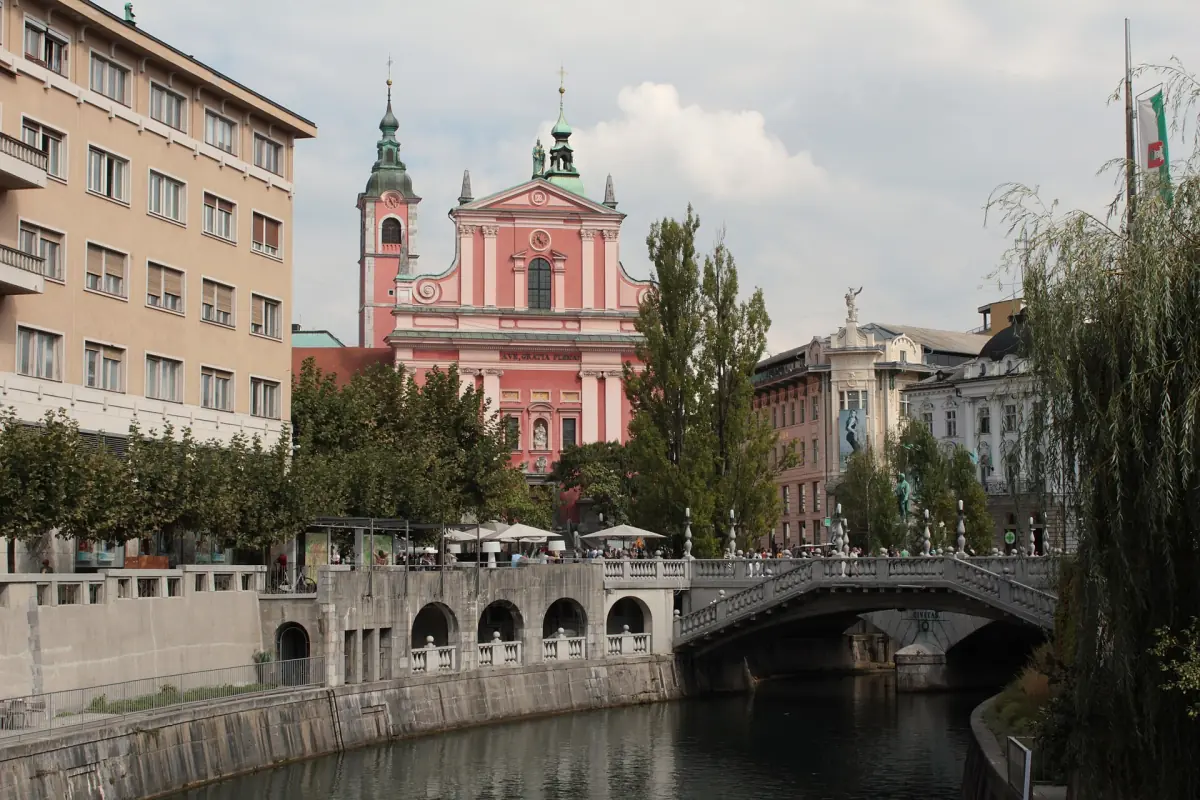
Reading Ljubljana history in the city today
Ljubljana history can be approached through places that reveal different periods: Roman remains near the present centre, bridges with distinct construction phases and the Slovenian history exhibition at the castle. These are connected ways of understanding the capital, but they should not be compressed into a single continuous account of one building. Begin by choosing whether you want to look at historical places outdoors, spend time in an exhibition or combine both.
The city is Slovenia’s capital and lies in the centre of the country. Prešernov trg, with the Franciscan Church, Prešeren Monument and Triple Bridge, is a useful setting for an initial historical walk. The Central Market and nearby Dragon Bridge add architecture to that route. The old-town guide helps arrange these places spatially, while this page explains the historical distinctions that make them worth looking at separately.

Roman Emona and the remains at Mirje
The Roman colony of Emona existed by AD 14, according to the inscription evidence described in the city’s account of Roman Ljubljana. This is evidence for its existence by that year rather than an exact founding day. It places the Roman settlement at the present city centre and offers an earlier starting point than the river bridges most visitors notice first.
Remains of the city wall survive in the Mirje area. Their later treatment is part of the story too: restoration followed Plečnik’s plans in the 1930s. Looking at these remains therefore involves both Roman material and a later approach to presenting it. Keep that distinction in mind when relating the wall to the architect’s better-known work at the Triple Bridge. The two locations connect different periods without belonging to the same original building project.
Our pick: castle visit
A local guide and castle ticket make this a way to connect the city with a castle visit.
Hand-picked tours, booked through Viator. Prices are indicative starting prices in euros (as of October 2026). Tap a tour for live availability and the current price in your currency.


Connect the city with the castle
A guided city visit from the Prešeren Monument includes a castle ticket and return funicular.
Two bridges, different dates and designers
The central stone bridge of the Triple Bridge dates from 1842. Between 1929 and 1932, Jože Plečnik added the side pedestrian bridges. The familiar arrangement consequently combines an earlier crossing with later additions. Looking from the middle to the sides provides a practical way of reading the construction phases, rather than assigning the entire structure a single date.
Dragon Bridge was built in 1900 and 1901. Reinforced concrete construction and Art Nouveau decoration are central to its identity, alongside the four large dragon figures. Josef Melan designed the structure and Jurij Zaninović the decorative work. It is not a Plečnik bridge. These details give you a firm basis for comparing it with the Triple Bridge without needing an invented dragon legend to explain the visit. Guided formats for seeing the city are described on the walking tours page.
The market and castle as places to continue
The market adds another architectural setting to the central route. Outdoor trading areas occupy Vodnikov trg, Pogačarjev trg and Dolničarjeva ulica, while enclosed sections sit in the seminary building and Plečnik arcades. It is useful to distinguish the historical setting from the operation of the market today. Individual trading hours affect a shopping visit even when your main interest is the surrounding architecture. The market guide separates the areas and their schedules.
The castle offers a different way to continue: its ticket includes the Slovenian history exhibition, viewing tower, Virtual Castle and Puppet Museum. The ticket page also includes video mapping and temporary exhibition spaces. Choose the exhibition visit if you want historical interpretation alongside the outdoor city route. The castle ticket with funicular includes the return ride; separate transport and admission choices are explained in the castle guide.
Choosing a historical visit format
The two-hour city tour including the castle begins in Prešernov trg, in front of the Prešeren Monument. It includes a local professional guide and a castle ticket with return funicular. This provides a guided visit option for connecting city and castle. Keep its stated duration and meeting place in mind when arranging the rest of your day, rather than treating it as an unlimited museum visit.
The Ljubljana Card is another planning tool when you intend to combine attractions and city transport. It activates at first use and runs for a continuous period; included attractions generally permit one admission each. Its city walk requires advance reservation, and the card guidance recommends arranging a time for Plečnik House. For a historical visit, select the places you actually want to see before choosing a ticket format. A card, a guided tour and an independent bridge walk serve different plans, even when the same city landmarks appear in each.
Frequently asked questions
Was Emona founded on a known day in AD 14?
The inscription evidence shows that the colony already existed by AD 14; it does not supply an exact founding day.
Is all of the Triple Bridge from Plečnik’s period?
The middle stone bridge dates from 1842. Plečnik added the side pedestrian bridges between 1929 and 1932.
Where can I add a history exhibition?
The castle ticket includes the exhibition on Slovenian history, alongside the viewing tower, Virtual Castle and Puppet Museum.